
Owning a home in Mumbai and its surrounding areas is a dream for many. When searching for budget-friendly housing, most people immediately think of MHADA (Maharashtra Housing and Area Development Authority). People often wait for years for the lottery, hoping to secure a flat at a price well below the market rate.
But is affordability the only thing that matters? In the rush of excitement, people often focus solely on the price while overlooking “hidden” issues that could later cause sleepless nights. If you are planning to buy a home through the 2026 lottery or the resale market, stop and think. There are certain disadvantages of MHADA flats that could make your investment risky.
Today, let’s have an honest conversation about the challenges of living in or investing in MHADA flats. My goal is to help you spend your hard-earned money wisely, rather than locking it into a property that only brings you stress.
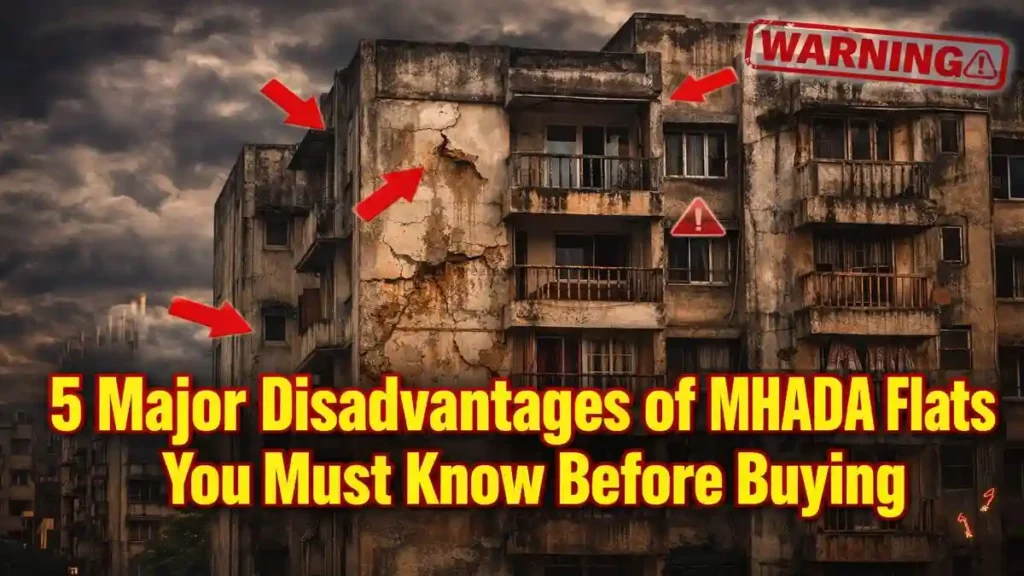
Main Disadvantages of MHADA Flats
If you’re in a rush, here’s a quick summary of the main Disadvantages of MHADA flats:
- Leasehold vs Freehold property: MHADA retains ultimate ownership of the land. You only hold lease rights rather than full freehold ownership.
- Lock-in Period: Resale restrictions make it difficult to sell these homes immediately.
- Infrastructure Issues: Older MHADA buildings often struggle with water shortages, power cuts, and limited parking.
- Slow Appreciation: These flats generally increase in value much slower than properties from private builders.
- Bureaucracy: Any major alterations or reconstruction projects require MHADA’s permission, which is often a long and tedious process.
Note: MHADA flats are a solid choice if you need an affordable place to live. However, if you prioritize “freedom of ownership” or “quick profits,” this might not be the right deal for you.
1. Ownership Issues: The Truth About Leasehold Property
The biggest shock for many buyers is realizing that owning a MHADA flat doesn’t mean you own 100% of the land. While private buildings are often freehold, MHADA flats are leasehold properties. Understanding the difference between Leasehold vs Freehold property is crucial before you invest.
Since MHADA is a government body, it remains the ultimate owner of the land. You essentially rent the land on a lease for 30 or 99 years. When buying a home, you must verify its status to avoid future surprises.
The Challenges of Leasehold Flats
- Lease Renewal Hassle: Once the lease expires, you must renew it. This process involves expensive fees and extensive paperwork.
- Renovation Restrictions: You cannot make major changes or reconstruct the building freely. You need a No Objection Certificate (NOC) from MHADA for almost every structural step.
- Red Tape: Dealing with government offices can be draining. You will likely face bureaucratic hurdles and slow approvals for every permission you seek.
2. Financial Constraints: Resale and Lock-in Period Challenges
From an investment perspective, MHADA flats carry certain risks, primarily due to strict regulations.
The Lock-in Period Problem
In the past, MHADA enforced a strict 5-year lock-in period, preventing owners from selling their property before that timeframe ended. While rental rules have eased recently, resale regulations remain complex. If an emergency arises, you cannot sell these units as easily as a private apartment. Consequently, the MHADA lock-in period can significantly limit your financial flexibility.
Slow Property Appreciation
Private developers usually offer amenities like gyms, swimming pools, and clubhouses, which drive up property values quickly. In contrast, property appreciation in MHADA is often much slower because these buildings offer very few facilities, making them less attractive for rapid price growth.
| Feature | MHADA Flats | Private Projects |
| Resale Ease | Difficult (Rules applied) | Very Easy |
| Price Growth | Moderate/Slow | High |
| Ownership | Leasehold | Mostly Freehold |
Difficulty in Getting a Home Loan for MHADA Flats
Banks often hesitate to approve a home loan for MHADA flats, especially when the building is old or the paperwork has even minor errors. While banks like SBI and Axis do offer financing, their documentation process is so strict that it can feel overwhelming. Something as simple as a single missing receipt from years ago can result in your loan being rejected!
3. Infrastructure & Lifestyle: Water, Power, and Parking Issues
The biggest downside of living in a MHADA colony is the struggle with basic amenities. If you are expecting a luxury lifestyle, the reality here will likely disappoint you.
- Water Scarcity: Many older MHADA buildings only receive water for a few hours a day. Residents rely heavily on the municipal supply, and these shortages often turn into a crisis during the summer.
- Frequent Power Cuts: Maintenance in MHADA areas is usually slower than in private townships. Old wiring and overloaded circuits frequently lead to power cuts and electrical issues.
- The Parking Struggle: This is the most frustrating part of living here. Parking is extremely limited and usually operates on a “first-come, first-served” basis. If you own a large car, expect a daily battle for a spot. Without allotted parking, you’re forced to park on the street, which puts your vehicle at risk.
4. Construction Quality & Location: Private Builders vs. MHADA
Are MHADA homes sturdy? The answer is a bit mixed.
The Reality of Construction Quality
While private builders prioritize modern aesthetics, high-end tiles, and fancy fittings, MHADA focuses strictly on providing a basic “roof over your head.”
- Lack of Ventilation: Many affordable MHADA projects lack proper cross-ventilation, making the units feel cramped and suffocating.
- Aesthetic Appeal: MHADA buildings usually feature an old-fashioned, “box-like” design. If you prefer stylish glass facades, the construction quality of MHADA—at least visually—will likely disappoint you.
The Location Challenge
Affordable housing rarely sits in the heart of the city. Most new MHADA schemes are tucked away in distant outskirts like Virar or Kalyan.
- Commute Time: Living far from railway stations or highways significantly increases your daily travel time.
- Lack of Connectivity: Some projects are in areas where even finding an auto-rickshaw or a bus is a struggle, which ultimately lowers your quality of life.
5. Loan & Documentation: Why Does Paperwork Drive You Crazy?
If you think winning the lottery is the final step, think again. The real work starts afterward. The documentation for MHADA flats is incredibly detailed and requires careful attention.
- Complexity of the MHADA transfer process: When buying a resale flat, you must have the owner’s old records, allotment letter, and possession receipt. If even one document is missing, the entire transfer will stall.
- Strict Bank Scrutiny: Banks usually grant loans for private properties easily, but they scrutinize every detail for MHADA. If an old building lacks a clear Occupation Certificate (OC) or Conveyance Deed, most major banks will reject your home loan for MHADA flats.
- Hidden Costs: Transfer fees and society dues can quickly drain your budget. Always calculate these extra costs in advance to avoid surprises.
Conclusion: Who Should Buy a MHADA Flat?
Is buying a MHADA flat a bad idea? Not at all. It really comes down to what you prioritize.
If you are working with a limited budget and want to escape the rent cycle, MHADA is a solid choice. It allows you to own a home, even if it is on a leasehold basis. However, you should be aware of the disadvantages of MHADA flats, such as older infrastructure or limited maintenance in some projects.
On the other hand, if you are an investor expecting rapid property appreciation in MHADA units within 2-3 years, you might be disappointed. Similarly, if you prioritize posh amenities and dedicated parking, you are better off exploring properties from private builders.
Frequently Asked Questions
Can I sell my MHADA flat before 5 years?
No, MHADA flats typically come with a 5-year lock-in period. While revised rules may allow you to rent out the property under specific conditions, the restrictions on reselling remain very strict.
Is MHADA property safe?
Yes, definitely. Since MHADA is a government body, it is legally secure. You face a much lower risk of fraud compared to buying from private developers.
What is the difference between a MHADA flat and a private flat?
The main differences are price and ownership type. MHADA flats are more affordable and usually sold on a leasehold basis, whereas private flats cost more and are often freehold.
Disclaimer: The information in this article is for educational and awareness purposes only. MHADA rules and policies change periodically. Please check the official MHADA website or consult a legal advisor before investing in property or making legal decisions. Our website is not responsible for any financial losses or misunderstandings.
